

 22/02/2026
torah


Prophecy and Holiness in the Rambam: The Uniqueness of Moshe Rabbenu and the Limits of Revelation
Nevua: A Message That Must Contract
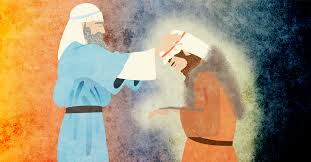
Other prophets (nevi’im) do not receive the Divine word directly.
➡️ Revelation comes through a malach (angel)
Why?
Because Divine light is too intense to be perceived without mediation.
This “descent of levels” explains a central feature of prophecy:
➡️ Prophets perceive meshalim (parables), symbols, and images
Not because the message is inherently metaphorical, but because it must contract to become understandable.
The Absolute Exception: Moshe Rabbenu
The Torah describes Moshe Rabbenu with unique expressions:
“Peh el peh adabber bo” (Bemidbar 12:8)
“Panim el panim diber Hashem el Moshe” (Shemot 33:11)
Moshe Rabbenu:
- does not prophesy through a malach
- does not require parables
- does not receive riddles
- perceives the message clearly and directly
➡️ A lucid vision, without symbolic filters
Why Only Moshe Can Receive the Torah
This distinction is structural, not philosophical.
➡️ Only Moshe Rabbenu can bring down the Torah
Because the Torah is Divine revelation without intermediaries, and no other prophet reached that level of perception.
Fear Versus Stability in Prophecy
When other nevi’im receive prophecy:
- they tremble
- they are overwhelmed
- they lose physical stability
Moshe Rabbenu, by contrast:
➡️ Remains composed, conscious, present
Like one speaking with a trusted friend.
“On-Demand” Prophecy
Another decisive difference:
Other prophets
- must prepare
- isolate themselves
- elevate their state
Moshe Rabbenu ➡️ Is always ready
He can receive the Divine word whenever necessary.
An emblematic episode: the question of Pesach Sheni.
Moshe says:
➡️ “Stand, and I will hear what Hashem commands.”
A sign of continuous dialogue.
Permanent Separation
After Matan Torah:
- the people return to ordinary life
- even prophets return to physical existence
Moshe does not.
➡️ He remains in a constant state of connection
From this derives his permanent separation from his wife — a condition unique in history, not a general model.
The Radiant Face of Moshe
The Torah recounts that Moshe’s face emitted karnei or.
Rav Bekhor recalls the famous artistic misunderstanding:
- keren = ray
- but can also mean horn
➡️ Not horns, but rays of light
A symbol of total spiritual elevation.
Personal and Public Prophecy
The Rambam distinguishes two functions:
Personal prophecy
To deepen wisdom and understanding.
Prophecy for others
To guide, warn, or correct societies (example: Yonah and Ninveh).
Miracles Are Not Enough
A prophet may accompany his mission with:
➡️ Ot o mofet (sign or wonder)
But caution is essential:
➡️ Not everyone who performs miracles is a prophet
Illusion and deception exist.
Rambam’s Criteria for a True Prophet
A genuine prophet must be:
- great in Torah
- morally refined
- spiritually elevated
- detached from material drives
The miracle is only:
➡️ Reinforcement, not primary proof
When Must We Listen?
If a person appears worthy, coherent, and performs a sign:
➡️ The Torah commands us to listen
Suspicion without basis is not encouraged.
The Parallel With Witnesses
Just as with two witnesses:
➡️ Their testimony is accepted unless disproven
So too with a prophet who meets the necessary criteria.
“The Hidden Things Belong to Hashem”
Human beings judge what they see.
“HaNistarot laHashem Elokenu” (Devarim 29:28)
Hashem sees the heart:
“Man sees with the eyes, Hashem sees the heart.” (Shmuel I 16:7)
Prophecy in the Future
The prophets foretell an age when:
➡️ Young and old alike will prophesy
Not yet realized → interpreted as referring to the Messianic era.
Conclusion
The Rambam presents nevua as a precise system, not a vague mystical experience.
And establishes a cardinal principle:
➡️ Moshe Rabbenu is not merely “the greatest prophet”
➡️ He is an entirely distinct category
From this flows the unique and unrepeatable authority of the Torah.
Toward a future in which humanity will once again be capable of receiving Divine light.
Bimheirah beyameinu, with Mashiach. Amen.